
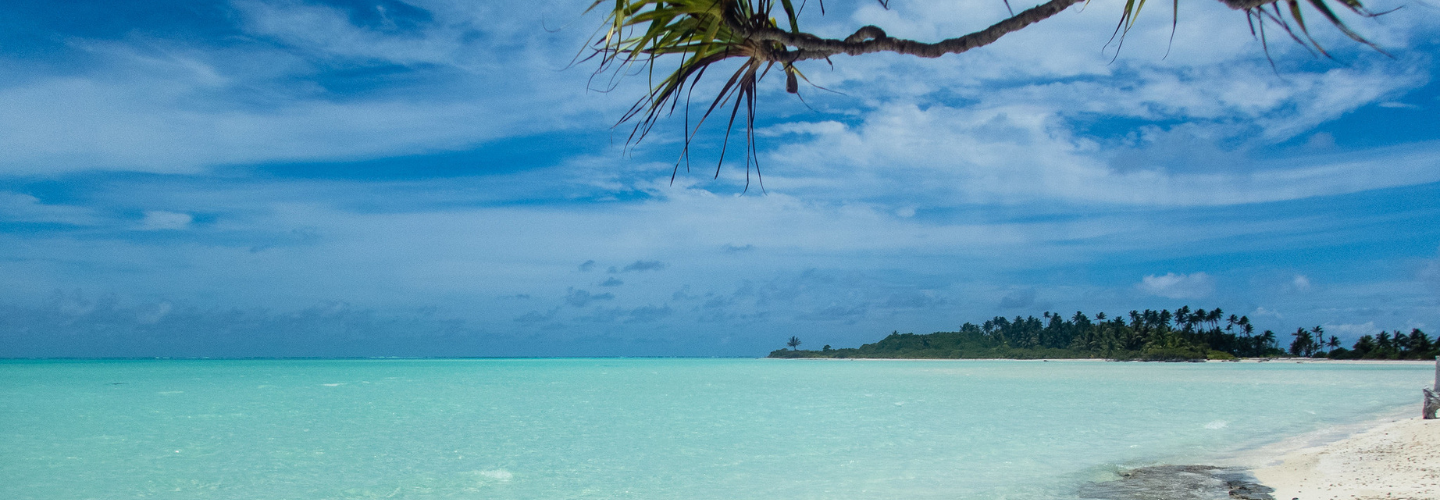
Across the Pacific, island ecosystems are on the frontlines of climate change—yet they are also international centers for innovation, resilience, and community‑driven conservation. The Island-Ocean Connection Challenge (IOCC) brings together partners across disciplines to protect the future of these precious yet resilient ecosystems. The Tetiaroa Society, an IOCC partner working in French Polynesia, continues to host cutting‑edge research that strengthens the ties between land and sea.
From tracking shark nurseries to mapping seabird habitat recovery, researchers on Tetiaroa are uncovering how species, habitats, and human decisions intersect across the land–sea gradient. Read about the research programs that make the Tetiaroa Society a beacon of holistic conservation for islands everywhere!
Understanding How Introduced Species Alter Atoll Ecosystems
Study of the Alteration of Terrestrial Ecosystem Functioning
A central question for climate‑resilient conservation is how disturbances—especially human‑introduced species—reshape natural systems. This long‑term doctoral project investigates how invasive species such as coconut palms influence:
nutrient fluxes
soil chemistry
arthropod communities and land crabs
litter decomposition rates
Researchers collected soil data, measured vegetation, and sampled invertebrates across multiple motu (reef islets). These findings will help clarify how changes on land influence ecological processes that connect to lagoon health—core to the IOCC’s focus on land–sea system dynamics. As the body of evidence grows, the Tetiaroa Society is helping mainstream the long-held indigenous knowledge that land and sea (or, in this case, lagoon) are connected!
Seabird Restoration & Land–Sea Nutrient Pathways
ATTRACT Program: Seabird Restoration on the Tetiaroa Atol
Seabirds are powerful engineers of island ecosystems. Through their nesting and guano deposition, they transport ocean‑derived nutrients onto land, nourishing vegetation and enriching soil. The nutrients then wash into the surrounding reef ecosystems, boosting their productivity.
The ATTRACT team, led by the Tetiaroa Society with support from The Nature Conservancy and the European BestLife2030 program, strengthened automated monitoring systems—including new cameras on Rimatuu and Horoatera. These systems work in tandem with social-attraction techniques, which encourage seabirds to nest using audio recordings. The monitoring systems detect returning seabirds and help us understand how effective these social-attraction techniques really are! A sustainable long‑term monitoring strategy is essential for rebuilding the natural nutrient pump that links ocean and land across Tetiaroa.
Tracking Lagoon & Reef Fish Populations for Climate‑Resilient Management
Monitoring Fish Populations in the Lagoon and Outer Slopes
Through surveys at 12 monitoring stations, divers documented fish abundance, diversity, and benthic conditions across the lagoon and outer reef crest.
Key early findings include:
exceptionally high coral diversity and coverage
high juvenile fish presence in the lagoon, reinforcing its role as a nursery habitat
These data will be compared with surveys from 2007, 2008, and 2015—providing a rare long‑term dataset to assess the impacts of conservation zones and climate change on reef ecosystems. Such insights directly advance the IOCC’s goal of supporting adaptive, science‑based marine management!
Shark Nursery Research: Mapping Predator Use of Coastal Habitats
Ecology of Reef Sharks in Tetiaroa
Sharks play a critical role in maintaining reef resilience. During the latest field season:
69 sharks were newly tagged (51 blacktip reef sharks, 18 sicklefin lemon sharks)
3 new acoustic receivers were deployed
over 1 million total acoustic detections were logged in the lagoon system to date!
The data will help researchers understand how young sharks use lagoon nurseries, how movement varies by sex and season, and how these predators respond to environmental change—supporting resilience ecosystem-wide!
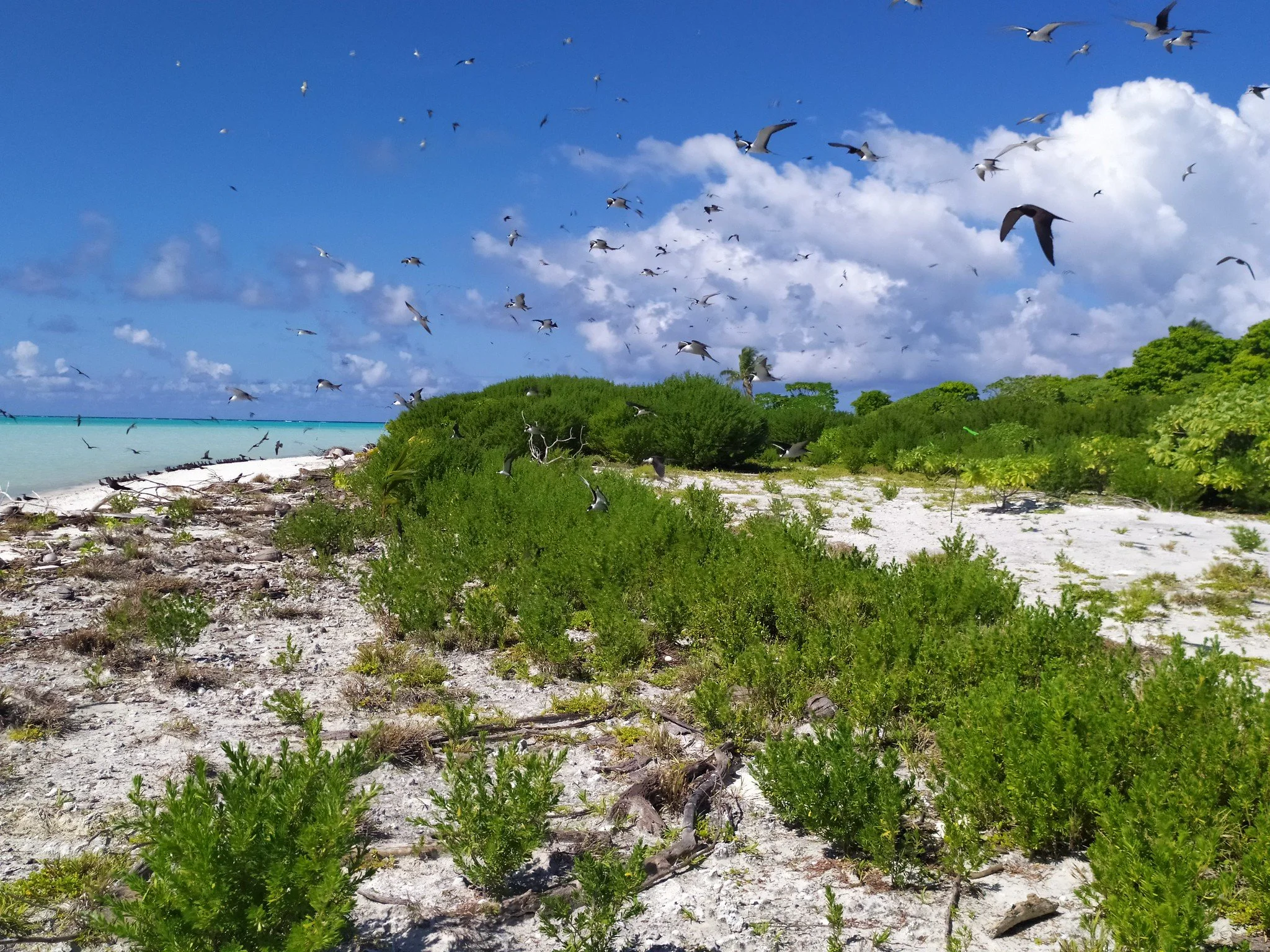
Tetiaroa is home to vital bird colonies that bring nutrients to its surrounding marine ecosystem. Photo credit: Island Conservation
Microplastics, Coral Health & Climate Stress
Ecophysiology and Microplastics in Coral Reefs of French Polynesia
Plastic pollution and warming oceans are dual threats to reef health. To understand their combined impacts, the research team:
collected plastic samples deployed for a year to study tropical degradation
analyzed microbiomes on biofilms and reef organisms
documented abundance and traits of corals, giant clams, and sea cucumbers across northern Tetiaroa
With microplastic baseline datasets already established, next steps include experiments on how plastic‑associated chemicals affect coral and clam physiology. This work sheds light on how pollution alters reef resilience—and how land‑based waste streams ultimately reverberate through marine ecosystems.
Invasive Species & Ecosystem Recovery
TARP Mission: Yellow Crazy Ant Monitoring
Yellow crazy ants are a major ecological threat across the Pacific. On Tiaraunu and Onetahi, these invaders were fully removed. This quarter’s post‑eradication surveys on Tiaraunu and Onetahi detected no recolonization, marking continued success in protecting the atoll!
Sustained monitoring through 2027 will help ensure these efforts support long‑term recovery of native species, including seabirds. Islands are rare places where these seemingly small interventions can have massive, outsized benefits!
The IOCC: Partnership, Science, and Restoration
Each of these research programs tells part of a larger story: Resilient islands depend on intact connections between the land and the ocean.
Tetiaroa’s important work helps the IOCC tell the often overlooked story of how seabirds move marine nutrients onto land, lagoon nurseries relate to coastal conditions, invasive species restructure entire food webs, and coral and fish health reflect decades of cumulative change.
By investing in interconnected research, the Tetiaroa Society embodies the transformational island stewardship the Island Ocean Connection Challenge champions globally. Read more in their report!
